The Importance of a Holistic Network Security Approach
Welcome to Texas Cyber Solutions, Houston’s trusted provider for elite, locally tailored cybersecurity solutions. Our team of experts specializes in safeguarding businesses across diverse industries, including healthcare, energy, education, and beyond. With cutting-edge tools, we deliver unparalleled security solutions tailored to your unique challenges.
Network security is more than just defending against cyber threats; it requires understanding risk, managing exposure, and aligning security with business operations.
A proactive security strategy integrates security audits, penetration testing, and continuous validation to create a resilient defense model that evolves with emerging threats. For organizations growing out of a reactive security model, this stage will increase resilience and reduce economic uncertainty from potential risks of cyber harm.
This guide breaks down the essential components of network security, the distinct roles of audits and penetration testing, and how businesses can integrate them into a structured cybersecurity program in alignment with industry standards such as the NIST Cybersecurity Framework, ISO 27001, and MITRE ATT&CK.

Table of Contents
The Three Pillars of a Robust Network Security Strategy
A strong security posture relies on three fundamental pillars:
- Preventative Security Measures – Implementing security policies, network segmentation, zero-trust architecture, and proactive controls based on zero-trust architecture (ZTA) principles.
- Detection & Response – Deploying Security Information and Event Management (SIEM), leveraging threat intelligence, and integrating Security Operations Centers (SOCs) for real-time monitoring and incident response.
- Validation & Testing – Conducting network security audits, vulnerability assessments, and penetration testing to ensure security controls remain effective and adaptive.
Neglecting any of these pillars creates vulnerabilities that attackers will exploit. By combining audits, penetration testing, and continuous threat intelligence, businesses can develop a layered security model that is both proactive and resilient.

Security Audits: The Foundation of a Secure Network
A network security audit comprehensively evaluates an organization’s security posture. It identifies misconfigurations, outdated systems, and compliance risks, offering a clear roadmap for remediation.
Why Businesses Need Security Audits
Organizations turn to Texas Cyber Solutions for audits for various reasons:
- Regulatory Compliance – Meeting industry standards such as NIST SP 800-53, CIS Controls, ISO 27001, HIPAA, PCI DSS, and SOC 2.
- Business Growth – Ensuring security infrastructure supports expansion without introducing vulnerabilities.
- Post-Incident Analysis – Assessing weaknesses and implementing stronger defenses after a security breach.
- Proactive Risk Management – Aligning with frameworks like FAIR (Factor Analysis of Information Risk) to reduce cyber risk exposure.

Real-World Example: How a Security Audit Prevented a Data Breach
Key Takeaway: Security audits establish a baseline security assessment that informs strategic decision-making and long-term protection.

Expanding the Role of Security Audits
Security audits are not just a compliance exercise; they are crucial in building an organization’s security-conscious culture. Regular audits can help:
- Strengthen incident response plans by identifying weaknesses before a breach occurs.
- Ensure third-party security compliance, verifying that vendors and partners adhere to required security standards.
- Support cyber insurance requirements, helping businesses obtain favorable coverage terms.

Learn more about Network Security Audits.
Vulnerability Assessments: The Bridge Between Network Audits and Penetration Testing
Following a security audit, a vulnerability assessment systematically reviews systems, networks, and applications to identify exploitable vulnerabilities, using Common Vulnerability Scoring System (CVSS) methodologies.
- Automated vs. Manual Assessments: Automated scans detect known issues, while manual testing prioritizes vulnerabilities based on real-world risk factors.
- Risk-Based Prioritization: Organizations should first focus on remediating high-risk vulnerabilities, following Risk-Based Vulnerability Management (RBVM) best practices.
Case Study: Preventing a Ransomware Attack
After hearing about industry-wide ransomware attacks, a financial services firm requested a vulnerability assessment. Our evaluation revealed unpatched software vulnerabilities that, if exploited, could have allowed attackers to encrypt critical financial records. The company significantly reduced its risk by prioritizing patch management and enhancing endpoint defenses.
Vulnerability assessments bridge the gap between security audits and penetration testing, ensuring that testing efforts focus on the most critical security gaps rather than low-priority issues.
Read our upcoming article on the difference between Vulnerability Scanning and Penetration Testing.
Penetration Testing: The Ultimate Validation of Security Controls
While audits and vulnerability assessments identify potential security weaknesses, penetration testing actively exploits them to measure real-world risk and validate existing security controls.
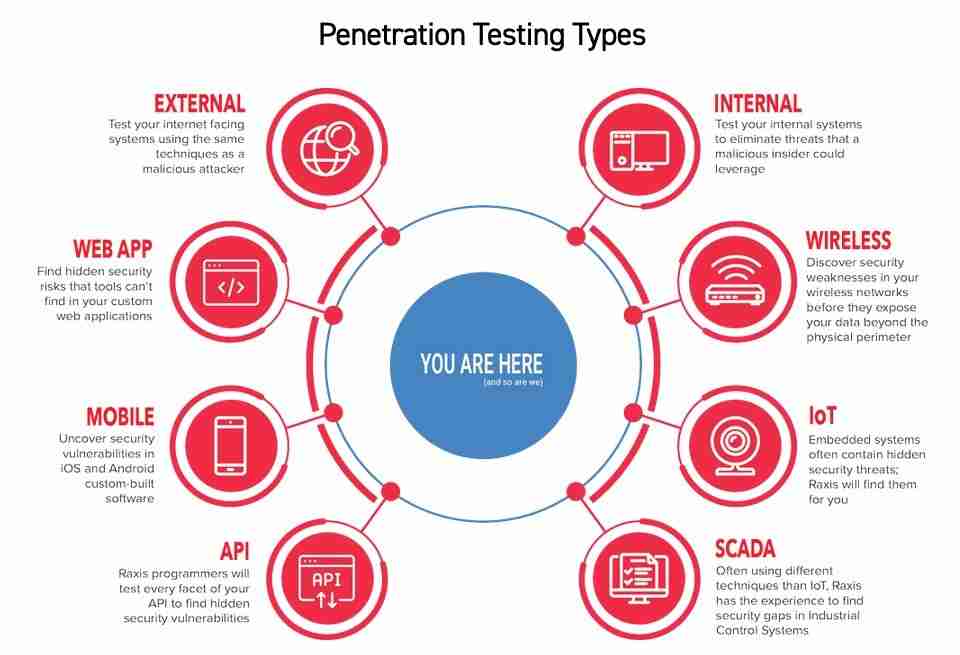
Types of Penetration Testing
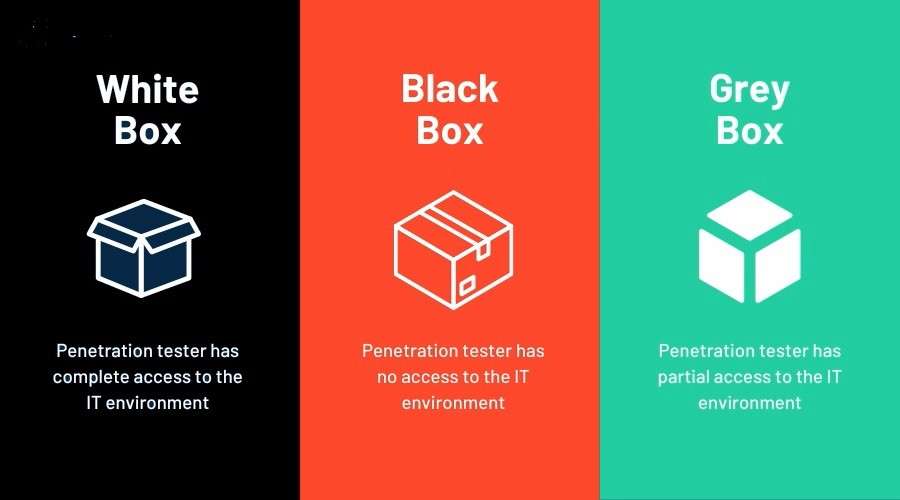
- Black–box testing: simulates an external attack without prior knowledge of the system, aligning with the OSSTMM (Open Source Security Testing Methodology Manual).
- Gray-Box Testing – Assesses security with partial system knowledge, simulating an insider attack or a compromised user account.
- White-Box Testing – Provides full system access, allowing for a deep security validation of internal components.
- Red Team Engagements – Simulates real-world adversarial threats, testing technical defenses and human response using MITRE ATT&CK Adversarial Emulation techniques.
The Business Impact of Penetration Testing
Penetration testing is more than just an exercise—it has a direct impact on business security by:
- Improving security awareness among employees and IT teams.
- Uncovering blind spots in security architecture that may not be visible in automated assessments.
- Demonstrating security effectiveness to stakeholders, auditors, and regulators.
Learn more about Red Team vs. Blue Team cybersecurity approaches.
The Future of Network Security: Emerging Trends
The cybersecurity landscape continues to evolve, incorporating AI, automation, and zero-trust methodologies to strengthen defenses. Key trends include:
- AI-Augmented Pentesting – Utilizing machine learning models to simulate attacks, identify vulnerabilities, and enhance response strategies.
- Zero-Trust Security Models – Eliminating implicit trust by continuously verifying every access request, in line with NIST Special Publication 800-207.
- Threat-Informed Defense Strategies – Aligning security programs with real-world attack tactics and intelligence, using frameworks like MITRE ATT&CK.
Learn more about Network Security Solutions Here
Building a Resilient Security Strategy
Organizations prioritizing proactive security measures reduce their attack surface and mitigate potential threats before they materialize. A robust security strategy integrates:
✅ Security audits for compliance and visibility.
✅ Vulnerability assessments for risk prioritization.
✅ Penetration testing for real-world security validation.
✅ Continuous security testing to address evolving threats.
By adopting a layered security approach, businesses can maintain a strong cybersecurity posture while ensuring regulatory compliance, operational resilience, and long-term risk management.
Schedule a security audit with Texas Cyber Solutions today!
Stay connected for more expert insights on network security strategies, penetration testing methodologies, and emerging cyber threats.
Let’s talk about your security.
Get a free cybersecurity consultation and ensure your organization’s safety and prosperity. Based in Houston, Texas, our team delivers the expertise and support you need to safeguard your business and enjoy peace of mind.
Contact Us Today
Don’t leave your cybersecurity to chance. Contact Texas Cyber Solutions today to take the first step toward securing your future. Let us partner with you to navigate the complexities of cybersecurity and protect what matters most.
Discover how our tailored cybersecurity solutions can drive efficiency and protect your business.
Call 832-271-4477 for prompt service or message us through our contact page.
Contact Texas Cyber SolutionsWhy Houston Trusts Texas Cyber Solutions
At Texas Cyber Solutions, we uniquely combine technical expertise with a personalized approach, ensuring that every cybersecurity solution is custom-tailored to meet your specific needs. Led by David Taxer, our team is dedicated to delivering excellence. With substantial contributions to the field—including advanced vulnerability assessments, insider threat expertise, and the development of key operational technology (OT) security frameworks—our reputation resonates strongly with Chief Information Security Officers (CISOs) and business leaders alike.
Our Mission is to Secure Texas Businesses
At the forefront of the digital age, our mission is to deliver unparalleled cybersecurity solutions that safeguard your organization’s most valuable assets, empower innovation, and cultivate a safer digital environment for everyone. We believe that robust security is the foundation for successful enterprises.
Our Methodology
Our holistic approach incorporates discovery, protection, response, and prevention to ensure robust and adaptable cybersecurity solutions tailored to your organization’s needs.
Learn More About Texas Cyber Solutions
Written By:
David Taxer is the founder of Texas Cyber Solutions, combining an attacker’s mindset with an investigator’s eye for evidence. His work spans penetration testing, security architecture, digital forensics and open-source intelligence, connecting technical weaknesses with the human behavior and business decisions behind them. Quoted by KHOU 11 and featured on Fraudish and The Hacker’s Cache, David writes about how attacks unfold, what the evidence reveals, and how organizations can build stronger defenses.