Understand the incident. Protect your next move.
A suspicious account, missing files or a ransomware message can leave you with urgent questions. Which systems are affected? What does the available evidence show? What needs attention first?
Texas Cyber Solutions helps Houston and Texas businesses separate those questions into a focused investigation and a practical response plan. Digital forensics examines the evidence. Incident response addresses the active threat and recovery priorities. You may need one, the other or a coordinated engagement.
Start with a high-level description. Do not send passwords, sensitive logs or raw evidence through the contact form. Incident response availability and responsibilities are confirmed before work begins.
Understand the evidence. Coordinate the response. Plan recovery.
Digital forensics: establish what the evidence supports
Reconstruct the relevant activity
An investigation can examine available records and artifacts to help establish a timeline, affected accounts or systems, and activity relevant to the agreed questions. The first step is defining the question, identifying potential sources and confirming authority to examine them.
Preserve context, not just files
Evidence is more useful when its source, collection method and handling are documented. We discuss preservation needs, access and collection arrangements before the work begins. Some account and log investigations can be handled remotely; devices and onsite systems need separate logistical planning.
Explain findings and limitations clearly
A timestamp, login record or recovered file does not explain an incident on its own. Analysis needs to distinguish observations from interpretations and identify gaps, conflicting records and alternative explanations. Discuss the expected report, supporting material and review process as part of the scope.
Our forensic specialist brings NSA training, military experience, and experience examining digital evidence for legal matters. The emphasis is careful evidence interpretation and findings that people can understand. The assignment, available evidence and applicable requirements determine what can be examined and reported.
Incident response: coordinate the next actions
When an incident is active, investigation and operational decisions need to work together. Texas Cyber Solutions coordinates specialist incident response through an established affiliate arrangement, with availability and responsibilities confirmed before work begins.
Establish the situation. Describe the symptoms, known timeline, affected systems and steps already taken. Identify who can authorize response work and who is coordinating the business decisions.
Set containment priorities. Discuss actions intended to limit further exposure while considering operational needs and the evidence that may be affected. Decisions depend on the incident and should be coordinated with the authorized responders.
Plan recovery. Establish what needs to be restored, what must be checked first and which security improvements need attention. Restoring access is only one part of returning to an understood, manageable environment.
Review what remains unresolved. Agree on reporting, follow-up questions and any additional investigation or remediation work. Recovery support, monitoring and later validation should have explicit scope rather than implied ongoing coverage.
An evidence-led approach grounded in established guidance
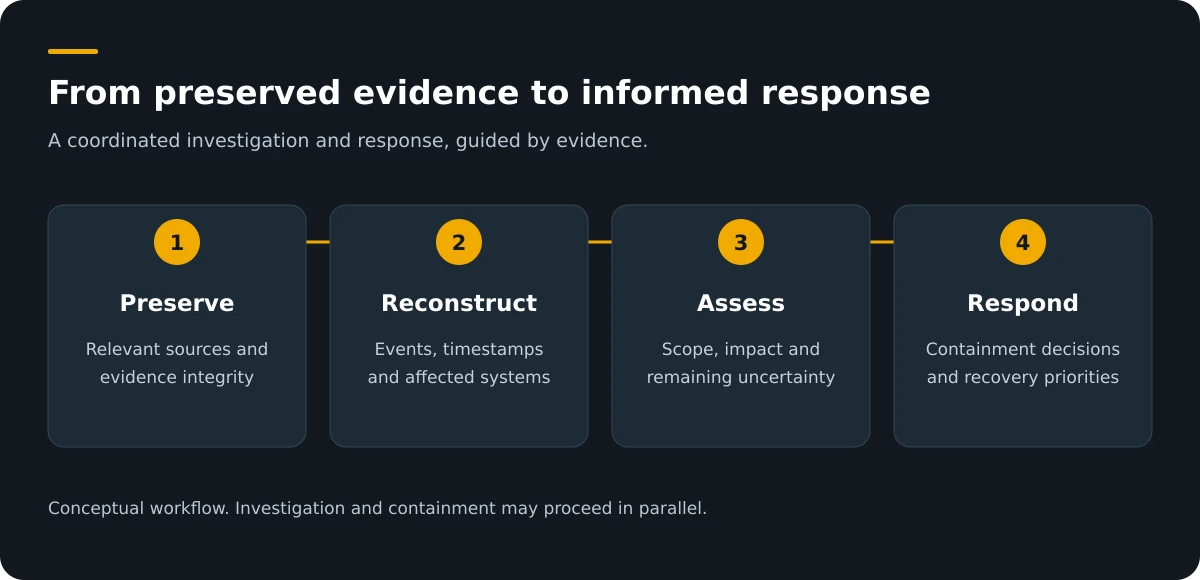
NIST SP 800-61, Revision 3 places incident response within cybersecurity risk management, connecting preparation with detection, response and recovery. That is a useful structure for deciding who needs to act, which information supports the decision and how the organization improves afterward.
For investigation work, NIST SP 800-86 describes integrating forensic techniques into incident response. Its collection, examination, analysis and reporting model helps separate the evidence-handling stages from conclusions drawn later. It is IT-forensics guidance, not a substitute for legal advice.
SWGDE reporting guidance provides a useful reference for understandable forensic reporting. These references frame the questions we address in scoping: how evidence is preserved, how findings are documented, and how response decisions are coordinated.
Before the first conversation
Prepare a high-level description of the issue, the approximate timeline, the systems involved and any actions already taken. Identify your authorized decision-maker and any existing response, insurance or legal contacts involved in the matter.
Do not send passwords, authentication codes, raw evidence, sensitive logs or personal records through the general contact form. We can discuss an appropriate process for sharing information after the initial conversation. If you believe your usual communications are affected, tell us that concern when arranging contact.
Questions businesses ask
Do we need forensics, incident response or both?
An active compromise may require coordinated response while investigators establish what happened. A past event may instead need a defined investigation. Start with the current situation and the decisions you need to make; the scope follows from there.
Can you guarantee recovery or identify every action taken?
No. Available logs, device condition, encryption, retention periods and prior changes can limit an investigation or recovery effort. Those constraints should be explained, not hidden behind a promise of certainty.
What if the matter involves a dispute or legal proceeding?
Discuss the intended use with us and your counsel so scope, qualifications and evidence-handling requirements can be established before work begins.
Houston-based coordination, clear next steps
David Taxer, founder of Texas Cyber Solutions, connects cybersecurity and investigation questions with practical engagement planning.
Tell us whether you need to investigate an event, respond to an active incident or prepare before one occurs. For preparation, explore our vCISO advisory services and security audits.
Keep your initial inquiry high level. We can discuss an appropriate process for sharing sensitive information after the first conversation.